
Shopify, Etsy y Amazon: requisitos creativos comparados
Shopify, Etsy y Amazon tienen culturas visuales, especificaciones creativas y patrones de comportamiento de compradores fundamentalmente diferentes. El contenido que se convierte en una plataforma a menudo tiene un rendimiento inferior en otra. Comprender los requisitos específicos de cada mercado es la base de una estrategia creativa de IA eficiente.
Clyero Team
Producto y crecimiento
March 28, 2026
Updated April 4, 2026
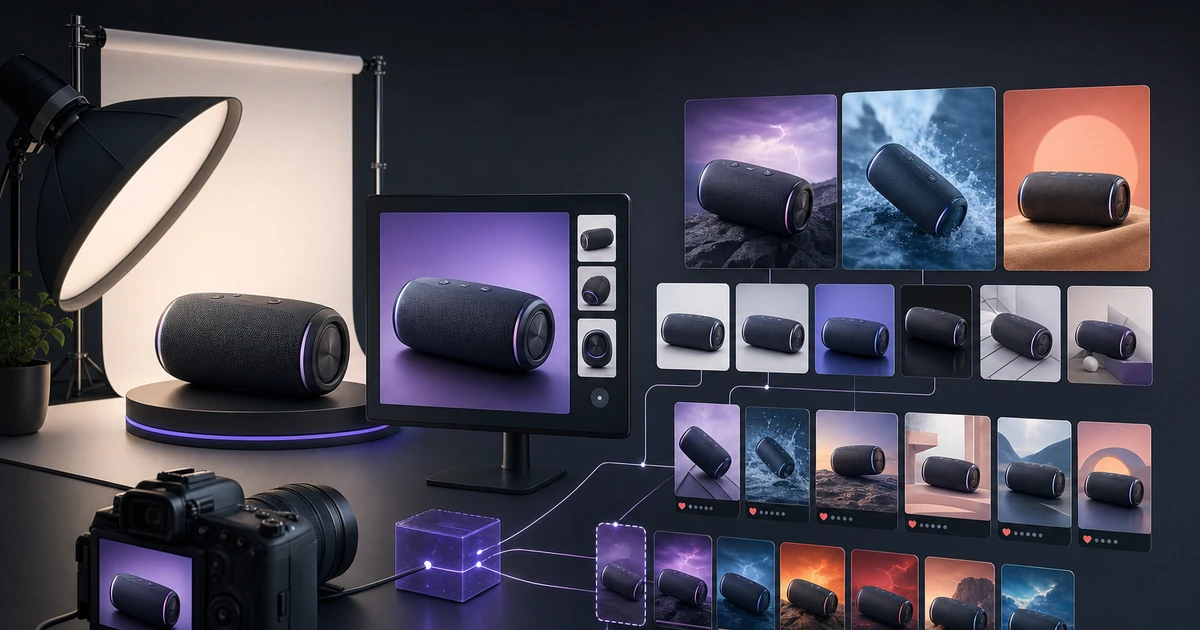
Vender en múltiples mercados requiere comprender que cada plataforma ha desarrollado una cultura visual distinta que da forma a las expectativas de los compradores. Los compradores de Amazon esperan imágenes de productos limpias y técnicas. Los compradores de Etsy esperan calidez, textura y artesanía. Los visitantes de la tienda Shopify responden a la identidad de marca y a la aspiración de estilo de vida. El mismo proceso de generación de IA puede servir a los tres, pero necesita diferentes parámetros de salida para cada uno.
Cómo difiere el comportamiento del comprador según la plataforma
Amazon: basado en búsquedas y centrado en la eficiencia. Los compradores llegan con una intención clara y comparan opciones rápidamente. Las imágenes deben comunicar las especificaciones, la escala y el estado del producto de forma precisa y rápida. El descubrimiento es algorítmico; la imagen principal determina los clics desde la búsqueda. La confianza proviene de la integridad de la información (todos los espacios de imágenes llenos, leyendas infográficas, contenido A+) más que de una aspiración estética.
Etsy: impulsado por el descubrimiento, impulsado por el gusto. Los compradores buscan productos que coincidan con una estética personal en lugar de buscar un artículo específico por especificación. El atractivo emocional de la primera imagen determina si alguien hace clic en un anuncio. La sensación de calidad artesanal, materiales orgánicos y toque personal influye en la compra. Los compradores suelen aceptar pagar más por la autenticidad y singularidad percibidas.
Shopify (tienda de marca): impulsado por la relación con la marca. El comprador generalmente llega a través de las redes sociales, anuncios pagados o recomendaciones de boca en boca; ya tienen una conexión con la marca. Las imágenes deben reforzar la identidad de la marca y adaptarse al estilo de vida más que comunicar especificaciones técnicas. La prueba social y la historia de la marca importan más aquí que en Amazon.
Comparación de especificaciones de imagen
| Especificación | Amazonas | Etsy | Shopify |
|---|---|---|---|
| Fondo de la imagen principal | Se requiere blanco puro | Cualquiera (estilo de vida recomendado) | Cualquiera |
| Resolución mínima | 1000px lado más largo | 2000px recomendado | 2048px recomendado |
| Imágenes máximas | 9 | 10 | Ilimitado |
| Texto en imagen principal | No permitido | Permitido | Permitido |
| Vídeo | Sí (ranura de vídeo separada) | Sí (la primera imagen puede ser un vídeo) | Sí (a través del tema) |
| Gráficos/infografías | Sólo imágenes secundarias | Permitido en todos | Permitido |
| Fotografía de modelos | Permitido | Permitido | Permitido |
Guía de Cultura Visual por Plataforma
Generando para Amazon
Las imágenes de listados de Amazon deben priorizar la densidad de la información y la precisión técnica.
Imagen principal: Fondo blanco puro. El producto debe llenar el 85% del marco. Sin elementos de estilo de vida, sin texto ni accesorios a menos que se vendan como un conjunto. Iluminación de estudio limpia y uniforme que muestra el color del producto con precisión.
Imágenes secundarias: Utilízalas como arquitectura de información. Imagen 2: ángulo alterno. Imagen 3: referencia de escala (producto con mano u objeto común). Imagen 4: leyenda infográfica con etiquetas de características. Imagen 5: estilo de vida en contexto de uso. Imagen 6: embalaje/contenido. Imagen 7+: cuadros comparativos, opciones de variantes.
Precisión del color: Más importante en Amazon que en cualquier otra plataforma. Un comprador que reciba un producto con color diferente al de la imagen dejará una reseña negativa. Genere imágenes de Amazon con validación frente a los valores HEX/Pantone del producto físico.
Parámetros de generación para Amazon: iluminación de estudio, iluminación uniforme, fondo blanco puro, centrado en el producto, relleno máximo del producto. Postprocesamiento: verificación de pureza del fondo, validación del color, limpieza de bordes.
Generando para Etsy
Las imágenes de los listados de Etsy deben priorizar el atractivo visual, la calidez y la impresión artesanal.
Imagen en miniatura: este es el espacio de imagen más valioso en Etsy porque es lo que aparece en los resultados de búsqueda. Debe ser una imagen de estilo de vida o de contexto cálido que comunique inmediatamente la estética y el sentimiento del producto. Una miniatura fuerte y distintiva con una composición excelente y colores cálidos gana el clic en una página de resultados de búsqueda competitiva.
Imágenes secundarias: responda las siete preguntas de compra: ángulos, materiales, escala, embalaje, uso y opciones de personalización. Pero mantenga la estética cálida y orgánica en todo momento; incluso las imágenes técnicas deben tener una cualidad de estilo de vida.
Parámetros de generación para Etsy: Luz natural, temperatura de color cálida, superficies orgánicas (madera, lino, mármol, papel envejecido), ligera imperfección en la composición. Evite la iluminación de estudio clínico en todas las tomas, excepto en las más técnicas.
Generando para Shopify
Las imágenes de las tiendas de marca Shopify deben reforzar la identidad de la marca y la aspiración de estilo de vida.
Imágenes principales y de colección: Más importante en Shopify que en otras plataformas. Éstos impulsan la impresión estética de la tienda y determinan si los nuevos visitantes sienten que la marca se adapta a sus gustos.
Imágenes de productos: Puede utilizar un fondo limpio o un estilo de vida según el posicionamiento de la marca. Las marcas premium y de estilo de vida se benefician de imágenes de estilo de vida en todas partes. Las marcas utilitarias o técnicas a menudo se benefician de fondos limpios con tomas con muchos detalles.
Alineación del kit de marca: Más importante en Shopify que en otras plataformas porque cada imagen se ve en el contexto de tu marca. Las imágenes inconsistentes en una tienda Shopify dañan la percepción de la marca más que en Amazon, donde cada listado tiene el mismo contenedor de plantilla.
La estrategia de generación multiplataforma
El enfoque eficiente para la generación de imágenes multiplataforma:
- Capture una fotografía de referencia de alta calidad por producto
- Genere variantes específicas de la plataforma a partir de esa referencia:
- Variante de Amazon: fondo blanco, iluminación de estudio, color de alta fidelidad
- Variante de Etsy: escena de estilo de vida cálido, superficie orgánica, luz natural
- Variante de Shopify: estilo de vida coherente con la marca, combina con la estética de la tienda.
- Genere recursos compartidos (tomas detalladas, referencia a escala, imagen de contenido) que funcionen en todas las plataformas con una adaptación mínima.
- Genere cultivos específicos de la plataforma a partir de cada variante para las dimensiones correctas
Esta estrategia produce entre 15 y 25 activos por producto que cubren las tres plataformas, a partir de una única fotografía de referencia, en una sola ejecución.
Matriz de prioridad de plataforma
No todas las marcas deberían invertir por igual en las tres plataformas. El patrón de inversión eficiente:
| Tipo de marca | Plataforma primaria | Inversión creativa prioritaria |
|---|---|---|
| Productos básicos de gran volumen | Amazonas | Optimización de la imagen principal, leyendas infográficas |
| Productos hechos a mano y únicos | Etsy | Miniaturas de estilos de vida, imágenes de detalles de texturas |
| DTC de marca premium | Shopify | Imágenes de héroes de marca, imágenes de colección |
| Vendedor multiplataforma | Los tres | Mínimo de imagen principal específica de la plataforma, recursos secundarios compartidos |
Construir un canal de generación de IA que sirva los tres a partir de una foto de referencia es la inversión creativa de mayor apalancamiento para las marcas que operan en todos los mercados.
Related Clyero workflows
Continue with practical workflows for product visuals, video, ad creative, and marketplace content.
Frequently Asked Questions
¿Puedo usar las mismas imágenes de productos en Shopify, Etsy y Amazon?
¿Qué mercado tiene los requisitos de imagen más estrictos?
Try it free
Build your first AI content pipeline
Turn one product photo into a full content system — images, videos, captions, and posts — in minutes.
Start for freeClyero Team
Producto y crecimiento
Writing about AI content creation, e-commerce automation, and the future of brand storytelling at Clyero.
Related Articles
Fotografía de productos sin fotógrafo: el flujo de trabajo de IA del vendedor en solitario
Los vendedores de comercio electrónico en solitario y las marcas de equipos pequeños no pueden justificar un presupuesto de fotografía profesional para cada producto. La generación de IA ofrece una alternativa práctica: produzca imágenes de productos listas para publicar a partir de las fotografías de su propio teléfono inteligente, sin conocimientos de fotografía, equipo de estudio ni software de diseño.
March 25, 2026
Fotografía de productos sin fotógrafo: el flujo de trabajo de IA del vendedor en solitario
Los vendedores de comercio electrónico en solitario y las marcas de equipos pequeños no pueden justificar un presupuesto de fotografía profesional para cada producto. La generación de IA ofrece una alternativa práctica: produzca imágenes de productos listas para publicar a partir de las fotografías de su propio teléfono inteligente, sin conocimientos de fotografía, equipo de estudio ni software de diseño.
March 25, 2026
Fotografía de productos de estilo de vida con IA: cómo colocar productos en escenas del mundo real
La fotografía de productos de estilo de vida (que muestra su producto en contextos de uso realistas y aspiracionales) genera una mayor conversión que las fotografías aisladas de productos en casi todas las plataformas. La generación de IA puede producir imágenes convincentes de estilos de vida sin necesidad de buscar localizaciones, accesorios ni fotógrafos profesionales.
February 14, 2026