
Generating Reels and TikTok Content from Product Images Using AI
Instagram Reels and TikTok are the highest-reach organic channels available to ecommerce brands — and both are video-first. AI image-to-video generation lets product brands create short-form video content from static product photos without filming, editing, or a video team.
Clyero Team
Product & Growth
March 8, 2026
Updated April 4, 2026
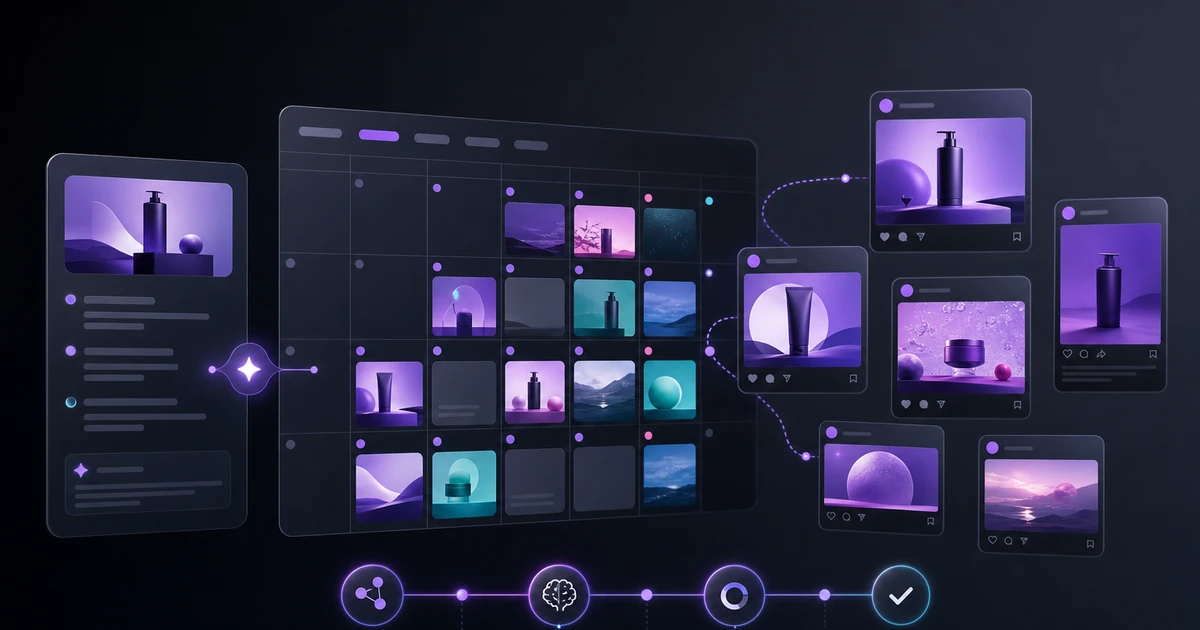
Reels and TikTok represent the most powerful organic distribution available to product brands in 2025. Short-form video on both platforms reaches new audiences through algorithmic discovery — not just existing followers — which makes them critical for brand awareness at scale. The barrier has been production: most ecommerce operators are not video producers.
AI image-to-video generation removes this barrier without requiring filming, editing software, or a creative team.
What AI Image-to-Video Produces for Reels and TikTok
Current AI video generation models convert a still product image into a 5–30 second video clip with realistic motion. For product content specifically, the motion types that perform best on short-form platforms are:
Orbital reveal: Camera slowly circles the product, revealing it from all angles in one continuous motion. Works for any 3D product. Communicates quality and craftsmanship without narration.
Zoom and focus: Slow push-in to a specific product detail — a texture, logo, or feature. Creates tension and visual interest. Pairs well with bold text overlay.
Environment build: The product appears first; the surrounding lifestyle scene builds in around it. Feels cinematic. Strong for home goods, beauty, and premium products.
Float and drift: Product floats against a clean background with natural micro-movement (gentle drift, slight rotation). Clean and versatile. Works for any product type.
Light play: Dynamic lighting changes across the product surface — moving from shadow to highlight, simulating changing light conditions. Especially effective for jewelry, skincare, and objects with interesting surface texture.
The Production Workflow
Prepare your source images (30 minutes per batch)
AI video quality is heavily dependent on source image quality. For each product you want to produce video content for:
- Select the 2–3 strongest product photos you have
- Ensure they are well-lit, clean, and at least 1024×1024 resolution
- Vertical compositions (portrait-oriented) adapt better to 9:16 output
- Lifestyle images with clear product focus work as well as studio shots
Generate videos in parallel (15–30 minutes generation time)
Run all source images through the video generation pipeline simultaneously. Specify:
- Output format: 9:16 (1080×1920)
- Duration: 7–15 seconds (optimal for Reels and TikTok completion rate)
- Motion style: per-product selection based on product category
A single batch of 10 source images produces 10–20 video clips depending on how many motion variants you generate per image.
Review for platform fit (20 minutes)
Review each video for:
- No visual artifacts or distortion on the product
- Smooth motion with no stutters or jumps
- Clean loop point (last frame matches or fades naturally to first)
- Product remains the clear focal subject throughout
Reject and regenerate any video where the product distorts, color shifts significantly, or motion looks unnatural.
Add text overlay and audio (15 minutes)
Short-form video without text underperforms because many viewers watch without sound. Add:
- Hook text in the first 1–2 seconds (3–7 words, high contrast)
- Product name or benefit statement at mid-video
- CTA text at end ("Shop now," "Link in bio")
For audio: short-form video with trending audio gets algorithm amplification. Use platform-native audio in TikTok (add in-app). For Reels exported with custom audio, choose a short royalty-free track that fits the product's emotional register.
Platform-Specific Posting Strategy
TikTok: Post 4–5 times per week minimum for algorithmic relevance. Front-load text hooks in the first frame. TikTok's discovery engine rewards completion rate — shorter videos (7–12 seconds) with strong first frames generate higher completion and broader reach.
Instagram Reels: Post 3–4 times per week. Reels perform best when the first frame is a strong visual statement. Use the caption for context and SEO keywords (Instagram now indexes Reels captions). Cross-post to Facebook for additional reach.
Content Calendar Integration
With AI-generated video, a monthly content calendar for Reels and TikTok becomes manageable:
| Week | Content |
|---|---|
| Week 1 | New product video launch (3 posts) + brand video (2 posts) |
| Week 2 | Lifestyle context videos (3 posts) + bestseller highlight (2 posts) |
| Week 3 | Feature/detail videos (3 posts) + comparison or range video (2 posts) |
| Week 4 | Repurpose top-performing content + new product teaser (3 posts) |
20 posts per month across both platforms, sourced entirely from AI-generated product video.
Related Clyero workflows
Continue with practical workflows for product visuals, video, ad creative, and marketplace content.
Frequently Asked Questions
What aspect ratio do Reels and TikTok require?
Do AI-generated product videos perform as well as filmed content on TikTok?
How often should ecommerce brands post Reels and TikTok?
Try it free
Build your first AI content pipeline
Turn one product photo into a full content system — images, videos, captions, and posts — in minutes.
Start for freeClyero Team
Product & Growth
Writing about AI content creation, e-commerce automation, and the future of brand storytelling at Clyero.
Related Articles
AI Social Media Content Generator with Scheduling and Publishing
A complete AI social media content generator should create visuals, videos, captions, hashtags, platform formats, and scheduled posts from one workflow.
January 18, 2026
AI Video Generation for Social Media: The Complete Playbook
Short-form video drives 80% of social media engagement but takes 4–8 hours to produce manually per clip. AI video generation tools have compressed this to under 10 minutes per video. Here is the complete platform-by-platform strategy for 2025.
December 20, 2025
AI Video Generation for Social Media: The Complete Playbook
Short-form video drives 80% of social media engagement but takes 4–8 hours to produce manually per clip. AI video generation tools have compressed this to under 10 minutes per video. Here is the complete platform-by-platform strategy for 2025.
December 20, 2025